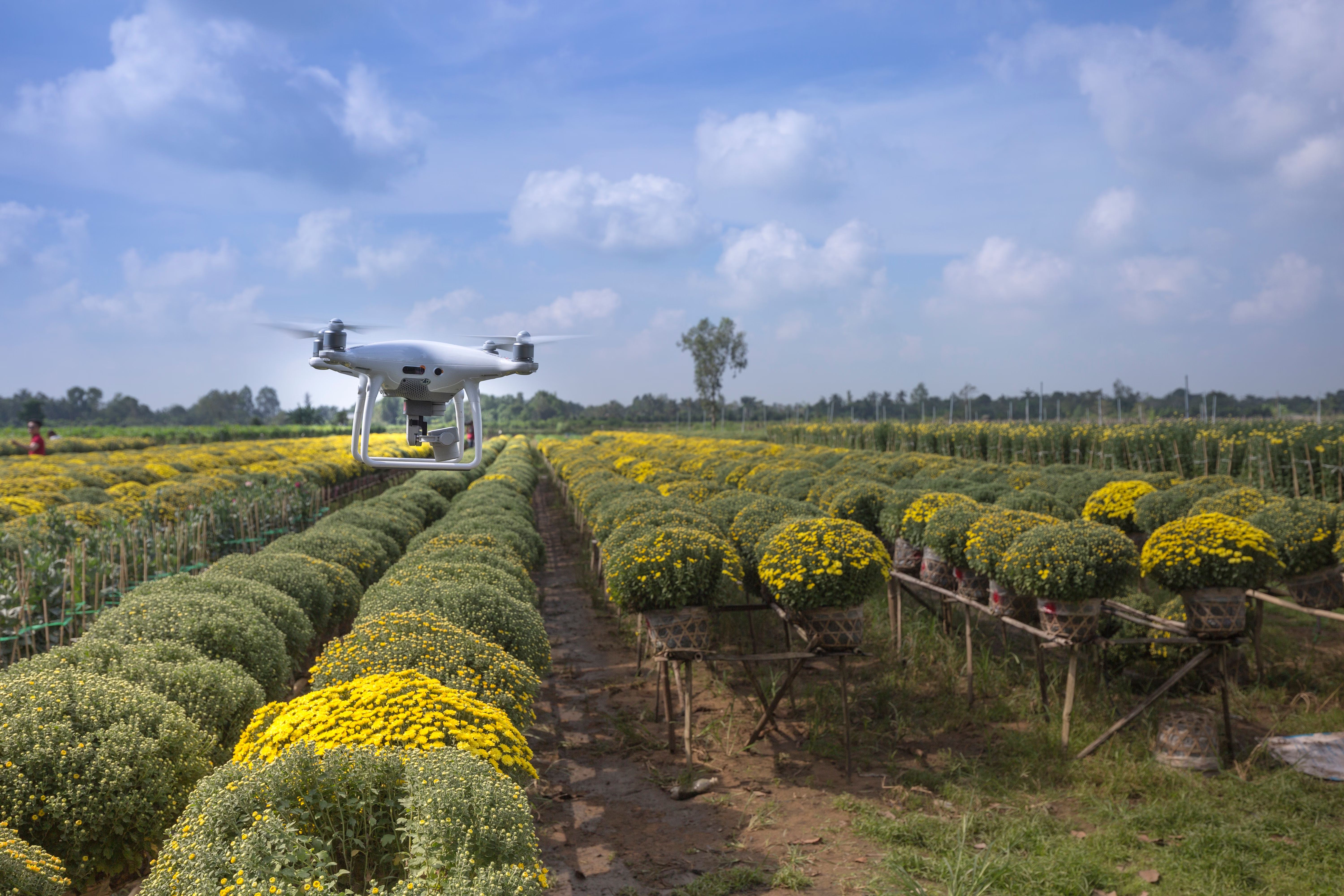
Trees are returning to agricultural landscapes
For decades, modern farming often removed trees and hedgerows to create larger, more mechanised fields.
Today, that trend is gradually reversing.
As extreme heat, prolonged drought and soil degradation become more common, researchers are rediscovering the benefits of trees within farming systems.
On 6 July 2026, the FAO highlighted how women cocoa farmers in Côte d'Ivoire are using agroforestry to protect crops from rising temperatures while improving productivity.
Trees naturally cool the landscape
Trees do much more than produce fruit or timber.
Their canopy shades the soil, reduces evaporation, improves water infiltration and creates better conditions for soil organisms.
This natural cooling effect can significantly reduce heat stress on nearby crops during extreme weather.
A model for many agricultural systems
Although the FAO article focuses on cocoa production, agroforestry principles are increasingly applied to orchards, vineyards, vegetable production and mixed farming.
Healthy tree systems improve biodiversity, soil fertility, carbon storage and long-term resilience.
These benefits become even more valuable as a strong El Niño develops alongside global warming, increasing climate risks for agriculture worldwide.
Home gardens can benefit too
Gardeners do not need a forest to apply agroforestry principles.
A fruit tree, a mixed hedgerow or a shaded pergola can create cooler growing conditions while supporting pollinators and reducing irrigation needs.
Small changes can make gardens much more resilient during increasingly hot summers.
Growing locally—and sustainably
Climate adaptation is about more than producing food.
It is about producing food that can withstand increasingly unpredictable weather.
This is where Seeed contributes.
By helping neighbours and small producers give, sell or exchange local harvests, the app supports shorter food chains, reduces waste and encourages resilient local food systems.
The future of food will not rely on a single breakthrough.
It will come from combining modern knowledge with practices that have helped agriculture adapt for centuries.
Sources
- FAO – More shade for more cocoa in Côte d'Ivoire
- FAO – Extreme heat in an El Niño year: how agrifood systems can prepare