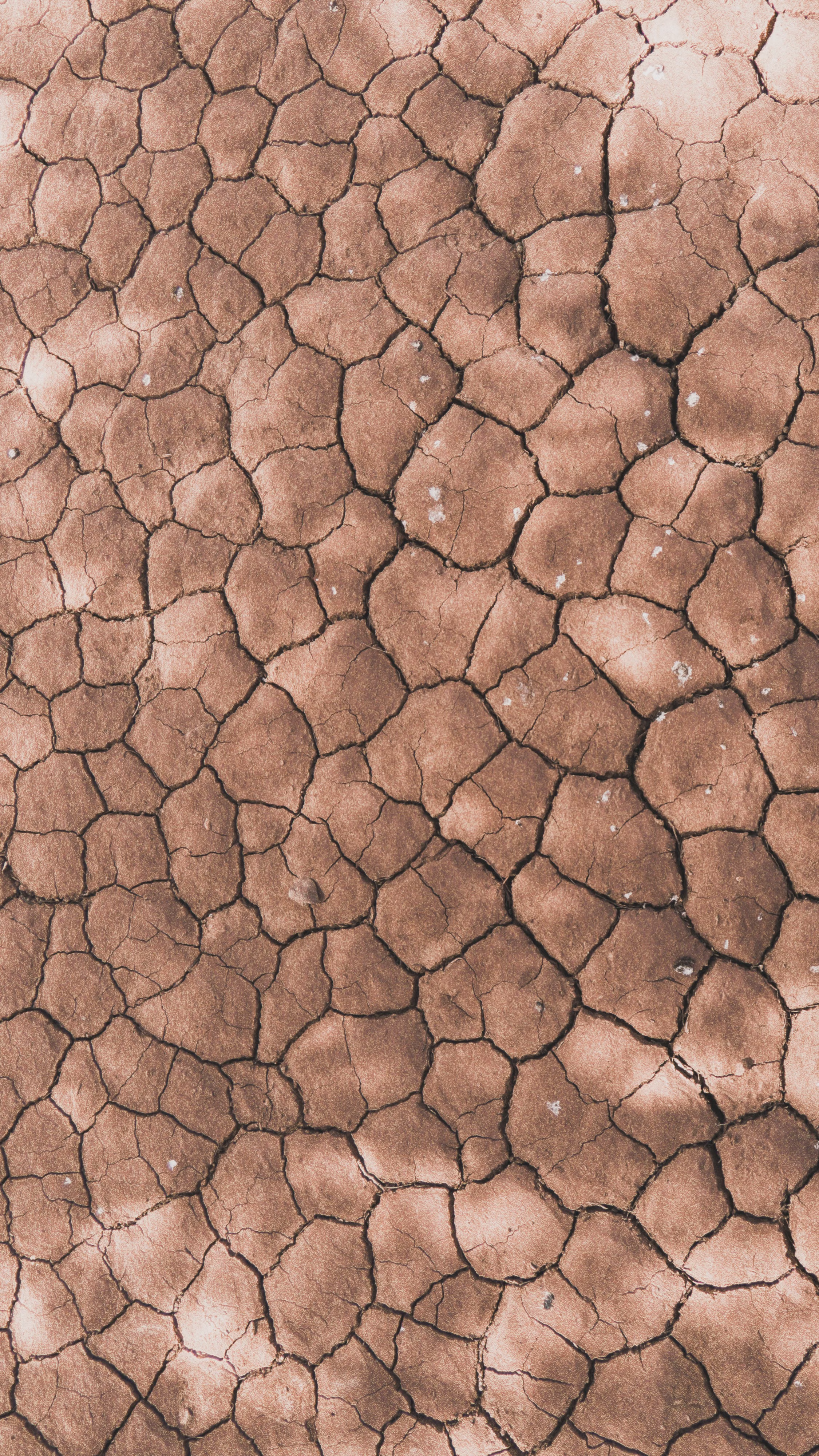
A summer beginning with already exhausted soils
In many gardens, the warning signs are visible without any data: cracked soil, drooping leaves by midday, lettuces bolting too early, courgettes slowing down, tomato plants needing the kind of care usually expected much later in the season.
What gardeners are seeing in their own vegetable patches is confirmed by national climate data. Spring 2026 was the warmest ever recorded in France since measurements began in 1900, with an average temperature 1.7°C above normal. It was also one of the ten driest springs recorded between 1959 and 2026, with a 30% rainfall deficit.
June then made the situation worse. According to Météo-France, June 2026 became the hottest June ever recorded in France, with an average temperature of 22.7°C, or 3.8°C above the 1991-2020 normal. Rainfall was almost 50% below average, and by the end of the month, soil drought had become widespread across mainland France and Corsica.
June’s heatwave changed the state of the soil
The heatwave that hit France from June 17 to June 30, 2026, was not only early. It was historically intense. Météo-France reported that June 24 and 25 were the hottest days ever recorded in France, with the national 24-hour average temperature reaching 30°C for the first time.
In a garden, this does not simply mean “a few extra degrees”. It changes how everything works. Bare soil heats quickly, loses moisture, becomes compacted and less welcoming to earthworms and soil life. Plants close their stomata to reduce water loss. They survive, but they grow more slowly. As a result, yields can fall even when the plants themselves do not die.
Météo-France also notes that, after a short break in May, soil drought became firmly established across the country and worsened day after day. By June 27, several regions were approaching their driest levels ever observed, including Alsace, Aquitaine, Auvergne, Limousin and Midi-Pyrénées.
Tap water can no longer be treated as an unlimited answer
For many home gardeners, the instinct is simple: when it gets hot, water more. But this response is becoming less obvious.
Water restrictions can change quickly depending on departments, river basins and local prefectural orders. The French government’s VigiEau platform centralises local restriction levels and allows residents to check what is currently allowed in their area.
Groundwater is not an unlimited reserve either. On June 1, 2026, BRGM warned that highly reactive aquifers are sensitive to prolonged and intense drought, and that projections for late summer 2026 remain uncertain. BRGM also notes that groundwater accounts for nearly two-thirds of drinking water consumption in mainland France and more than one-third of the water used by agriculture.
In other words, when summer begins with dry soils, scarce rain and temperatures far above normal, every watering decision matters more than before.
What gardeners can do now
The good news is that a vegetable garden can become much more resilient without expensive technology.
The first response is mulch. ADEME describes mulching as a simple method that reduces watering needs, limits weeding and gradually feeds the soil. Dead leaves, dried grass clippings, straw, wood chips, hay or plant residues all serve the same purpose: keeping soil covered instead of exposing it directly to the sun.
Watering habits also need to change. It is generally better to water less often but more deeply, early in the morning or late in the evening, rather than lightly moistening the surface during the hottest hours. Soil that is covered and rich in organic matter holds moisture better.
Crop choice is becoming more strategic too. Some plants cope better with heat: chard, well-rooted tomatoes, mulched squash, Mediterranean herbs and staggered bean sowings. Others, such as lettuce, spinach or radishes, can become difficult to maintain in high summer without shade or regular watering.
Rainwater harvesting, even on a small scale, can also make a real difference. A tank, a few containers or a simple system connected to a gutter will not solve everything, but it can help a garden survive several critical days without relying only on the public water network.
Drought also changes the value of harvests
When water is scarce, every fruit and vegetable produced becomes more valuable. A tomato ripening after three weeks of heat is not just a tomato. It represents water, time, living soil and care.
That is why food waste becomes even harder to accept. In many gardens, part of the harvest is still lost because there is no time, no nearby contact or no simple way to give, sell or exchange it quickly. Too many courgettes, overripe figs, tomatoes all ripening in the same week: these may be small surpluses for one household, but they become a real resource at neighbourhood level.
In hotter and drier summers, producing locally will not be enough. We also need to circulate local harvests more efficiently.
That is exactly where Seeed can help: by allowing people to easily offer their harvests nearby, whether they want to sell a few vegetables, give away surplus produce or exchange food with someone local. When water becomes more precious, preventing locally grown food from going to waste becomes a practical act of resilience, ecology and solidarity.
Drought reminds us of something simple: vegetable gardens are not just a hobby. They can become small pieces of local resilience — if we learn to protect them, and to share what they produce.
Sources
- Météo-France — Climate report for spring 2026: warmest spring since records began in 1900.
- Météo-France — June 2026 climate report: hottest June ever recorded, rainfall deficit close to 50%.
- Météo-France — June 2026 heatwave: historic event, soil drought and heat records.
- BRGM — Groundwater levels in France as of June 1, 2026.
- VigiEau — Official French water restriction map.
- ADEME — Mulching and water-saving advice for gardens.