Food prices may rise again
According to FAO Chief Economist Máximo Torero, the current period of relatively stable food prices may be temporary.
Published on 5 August 2026, a Reuters interview explains that geopolitical conflicts, higher energy costs, fertiliser shortages and a strong El Niño are expected to push food prices higher by late 2026 and into 2027.
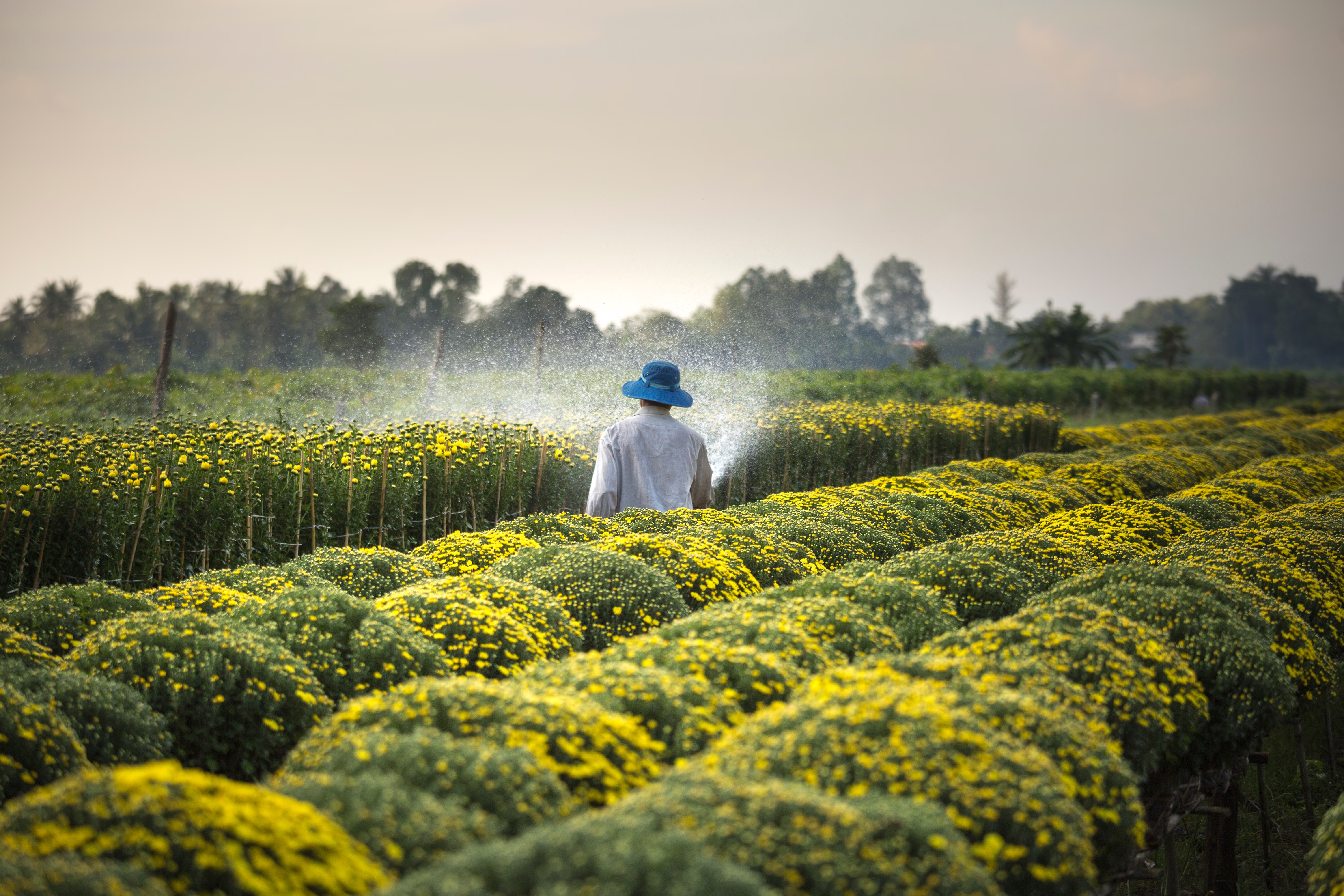
Farmers face rising production costs
Agricultural production depends on many expensive inputs, including:
- fuel;
- fertilisers;
- irrigation;
- transport;
- climate adaptation.
When these costs increase simultaneously, consumers eventually feel the impact.
Local food systems become more valuable
Short supply chains help reduce dependence on international logistics while supporting local farmers and fresher produce.
Although they cannot eliminate inflation, they strengthen community resilience.
Technology can also help
The FAO recently introduced CropSuit, a free digital platform that recommends the most suitable crops for local soil and climate conditions, helping farmers improve efficiency and resilience.
Every local harvest counts
Seeed enables gardeners and local producers to give, sell or exchange fresh produce nearby.
In uncertain times, every locally shared harvest helps reduce food waste, strengthen neighbourhood connections and improve food security.
Sources
- Reuters – FAO warns of rising food prices
- FAO – CropSuit
- FAO – COAG 2026