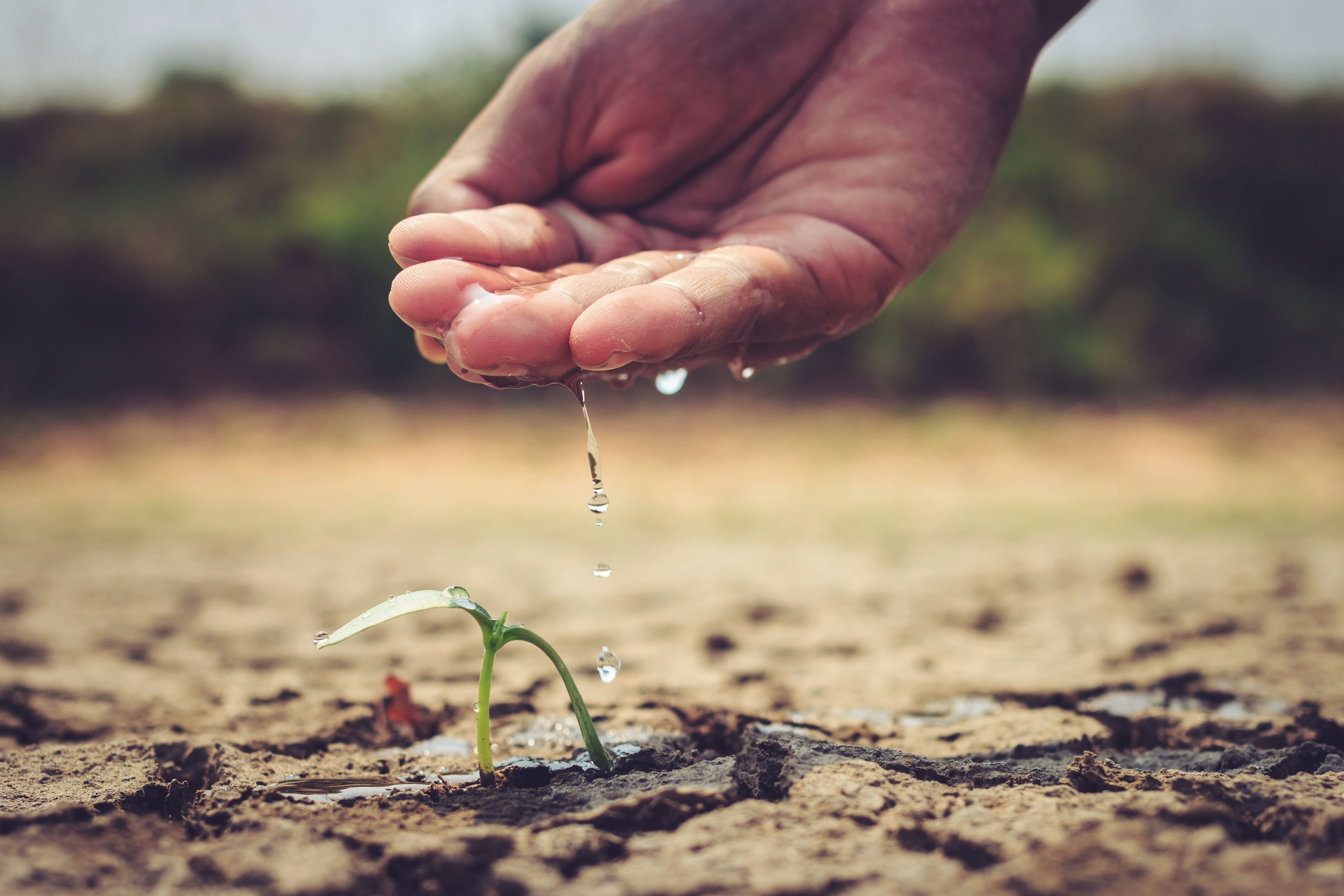
Water restrictions are already reshaping the season
Summer has barely begun, yet water has already become one of the central issues of the season in France. Across the country, local authorities are multiplying drought-related restrictions, in a context marked by an exceptionally warm spring, a significant rainfall deficit and early heatwaves.
As of July 1, 2026, data from the French government platform VigiEau showed that 27 departments already had areas under “crisis” status, the highest drought alert level. Twenty-four others were under reinforced alert, 19 under alert and 23 under vigilance. In other words, a large part of the country is already affected, to varying degrees, by water-saving measures or restrictions.
These figures are part of a broader trend. Météo-France ranked spring 2026 as the warmest ever recorded in France, with a temperature anomaly of +1.7°C. It was also one of the ten driest springs since 1959, with rainfall 30% below normal. A very dry April accelerated the drying of soils before the heat episodes of late May and June.
Underground reserves are also beginning to show signs of pressure. The French geological survey BRGM reported that by June 1, 2026, 77% of groundwater monitoring points were trending downward. At the end of May, 42% were below monthly averages. While the situation was not yet as severe as in the most critical years, the direction was clear: groundwater levels were falling, and the rest of the summer would depend heavily on uncertain rainfall.
Understanding the rules that apply locally
For individuals, these figures may sound distant. But they become very concrete for anyone with a garden, a vegetable patch, a planted terrace or fruit trees.
Drought restrictions can limit watering, ban pool filling, restrict car washing or regulate water use for green spaces. Rules vary depending on departments, municipalities, water resources and alert levels. Under vigilance, people are mainly encouraged to save water. Under alert, restrictions begin. Under reinforced alert, they become stricter. Under crisis status, water is reserved for priority uses such as health, drinking water and civil safety. For individuals, failing to comply with water restrictions can lead to a fine of up to €1,500, or €3,000 in the event of repeat offences.
Gardens must learn to grow differently
In vegetable gardens, water restrictions are not just administrative constraints. They are changing the way people grow food.
For a long time, many gardeners treated watering as an automatic gesture: a hose, a watering can, an evening routine, sometimes repeated more often during heatwaves. That model is becoming more fragile. When soils dry faster, nights no longer cool down enough and restrictions become more frequent, water can no longer be treated as an unlimited resource.
The first effects are visible on the most sensitive crops. Young plants, with shallow roots, suffer quickly. Lettuce goes to seed. Courgettes and cucumbers may slow or stop production. Tomatoes can handle heat, but not repeated stress. Beans, strawberries, herbs in pots and recently planted fruit trees are also vulnerable.
The second consequence concerns the soil itself. Bare soil exposed to the sun can become hard, dry and almost impermeable. Water runs off more easily, penetrates less effectively and evaporates faster. By contrast, soil covered with mulch, leaves, dry grass clippings, wood chips or companion plants retains moisture better. What was once presented as a simple gardening tip is becoming an adaptation strategy.
The third consequence concerns crop planning. Water-intensive varieties become riskier. Summer sowing needs more protection. Planting calendars may have to shift. Shade, hedges, trees and plant associations become more important. A garden is no longer only a place of production; it becomes a small climate-management system.
Producing better with less water
In this context, food autonomy can no longer be understood only as producing more. It must also include producing better, with less water, fewer losses and more local cooperation.
Drought does not affect everyone equally. Someone with a large garden, deep mulched soil, rainwater storage or an authorised well does not have the same options as someone growing a few plants on a balcony. An established garden will resist better than a newly planted one. One area may be under crisis restrictions, while another, a few kilometres away, may still have less constrained resources.
Making better use of local harvests
This local inequality raises a simple question: how can we make better use of what is already growing, instead of letting part of it go to waste?
In many gardens, even under difficult conditions, some harvests still arrive in quantity. Courgettes, tomatoes, plums, figs, herbs, seeds or seedlings may be available at a specific moment, sometimes in surplus. Elsewhere, people may be looking for local produce but have no way of knowing who is growing food nearby. What is often missing is a connection.
Today, these exchanges still depend heavily on chance: a conversation between neighbours, a message in a local Facebook group, a basket left outside a house. These practices have real value, but they remain scattered. At a time when water is becoming more scarce, harvests more uncertain and food waste still a problem, making local resources visible becomes a practical issue.
Seeed can connect local resources
This is where an app like Seeed can play a role.
Seeed helps people discover nearby gardens, vegetable patches, fruits, vegetables, seeds, plants and small local productions. The goal is not to replace markets, professional producers, local food associations or shops. It is to complement them by making visible the local resources that often remain outside traditional networks.
A private individual can offer surplus harvests. A gardener can give away or sell seedlings. Someone can reserve vegetables grown nearby. Others can swap seeds, herbs or fruit. In a context of water restrictions, this type of exchange becomes even more meaningful: it helps make better use of what has already been produced, reduce waste and build local support networks around gardening.
The question is no longer only: “Am I still allowed to water my garden?” It is also: “How can my local area better share what it already produces?”
Building more resilient local food systems
Water restrictions remind us that food depends on very physical resources: rain, aquifers, rivers, soils and temperature. They also remind us that solutions will not come only from large infrastructures or national decisions. They will also be built through local actions: mulching soil, choosing adapted varieties, collecting rainwater when allowed, avoiding waste, sharing seedlings, passing on seeds and offering surplus harvests.
In the years ahead, gardening as before may become increasingly difficult. Heat episodes are likely to arrive earlier, soils may dry faster, and water-use rules may become more frequent. This evolution imposes sobriety, but it can also open another way of thinking about gardens: less isolated, more local and more collective.
A single garden is fragile. A network of gardens, small producers, neighbours and shared harvests can become a resource.
As water becomes a central issue, short food circuits are no longer just an ecological or economic preference. They are becoming a way to make local areas more resilient. Not by promising total self-sufficiency, but by improving what already exists: the visibility of harvests, the circulation of surplus, mutual support between residents and knowledge of what grows nearby.
Drought forces us to save water. It should also push us to better connect our gardens.