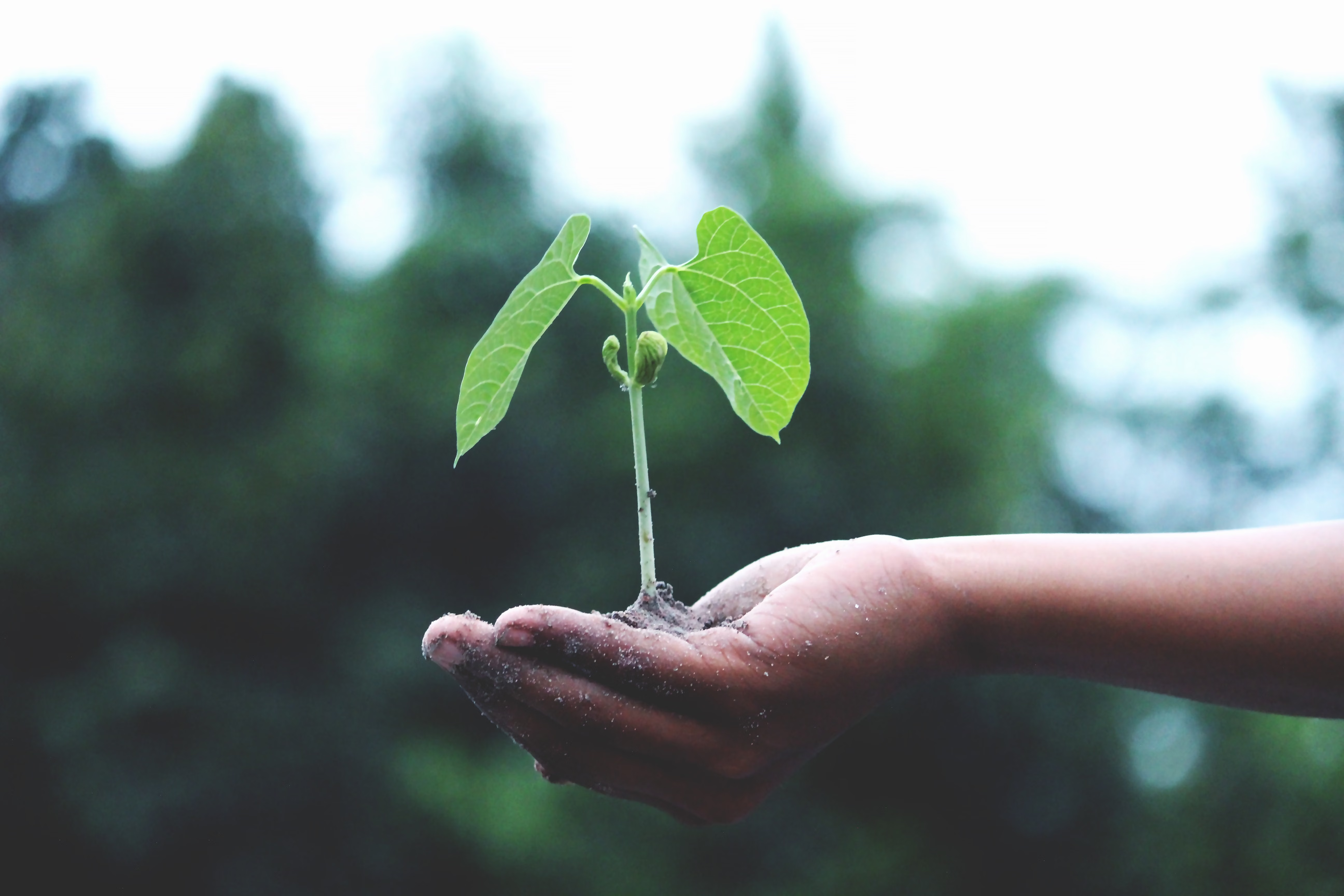
Everything starts beneath our feet
Healthy soils are home to billions of microorganisms that recycle nutrients, retain water and support plant growth.
Without healthy soil, sustainable agriculture becomes increasingly difficult.
At its 2026 Committee on Agriculture (COAG), the FAO highlighted sustainable land and soil management as a key priority and reviewed a proposal for a United Nations Decade of Soil Health (2031–2040).
Degraded soils threaten food production
According to the FAO, 1.7 billion people live in areas where land degradation is already reducing agricultural productivity.
Improving soil health is therefore essential for climate resilience and long-term food security.
Better soils, better harvests
Healthy soils:
- retain more water;
- support biodiversity;
- reduce erosion;
- improve crop resilience;
- require fewer external inputs over time.
Simple practices such as composting, mulching, crop rotation and maintaining living roots can significantly improve soil quality.
Technology can help
The FAO recently launched CropSuit, a free digital tool that recommends the most suitable crops for local soil and climate conditions, helping farmers improve productivity while protecting natural resources.
Every harvest deserves to be shared
Healthy soils require years of care.
Making the most of every harvest is therefore essential.
Seeed allows gardeners and small producers to give, sell or exchange locally grown food, reducing waste while strengthening resilient local food systems.
Protecting soil today is one of the smartest investments we can make for tomorrow's food.
Sources
- FAO – COAG 2026
- FAO – Land, Soil and Water News
- FAO – Sustainable Land and Soil Management